

The short answer
A CDD fee is an annual assessment paid to a Community Development District, a special-purpose local government that funds and maintains infrastructure and amenities in a community. CDD fees are billed on your property tax bill, not paid to an association, and they can add a meaningful amount to the yearly cost of owning a home.
What is a Community Development District?
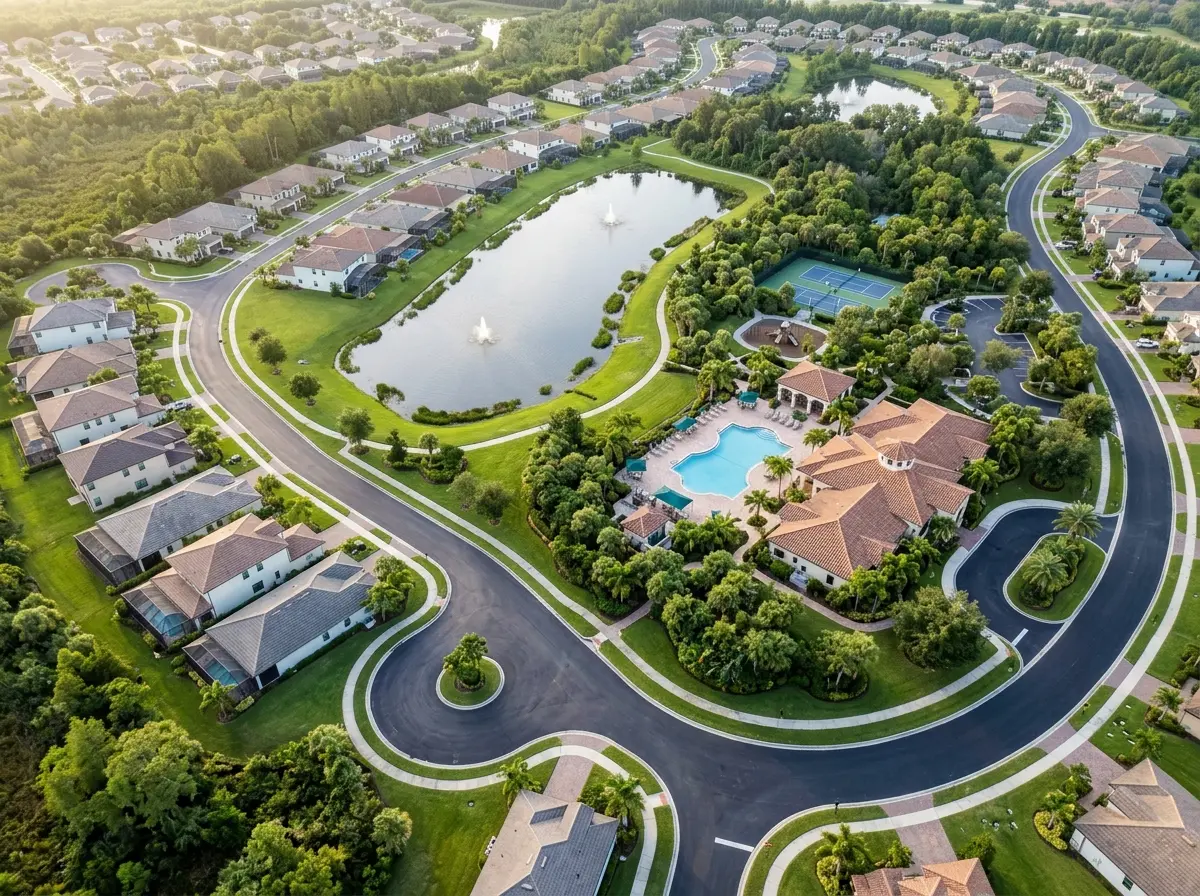
CDDs are created under Chapter 190 of the Florida Statutes. Developers often use them to finance roads, stormwater systems, water and sewer lines, landscaping and community amenities like pools and clubhouses. The district issues bonds to pay for that work up front, and homeowners in the district repay those bonds over time through their CDD assessment.
You are most likely to see CDDs in newer master-planned communities. In the Tampa Bay area, they are common in fast-growing parts of Pasco and Hillsborough counties and less common in older, established Pinellas neighborhoods.
What makes up a CDD fee?
Most CDD assessments have two parts:
- Operations and maintenance (O&M): Ongoing costs to maintain district property, such as landscaping, ponds and amenities. This portion can change from year to year.
- Debt service: Repayment of the bonds used to build the community’s infrastructure. This portion typically lasts for the life of the bonds, often many years.
Annual CDD fees range from a few hundred to a few thousand dollars, depending on the community (FirstService Residential).
CDD vs. HOA: what’s the difference?
| CDD | HOA | |
|---|---|---|
| What it is | A local unit of special-purpose government | A private association |
| How you pay | Once a year, on your property tax bill | Usually monthly or quarterly, to the association |
| What it funds | Infrastructure, bonds and district maintenance | Common areas, amenities and rule enforcement |
| Rules and meetings | Subject to Florida public records and open meeting laws | Governed by the association’s documents |
Many communities have both a CDD and an HOA, so it is important to budget for each.
Why CDD fees matter when you buy
CDD assessments are part of your tax bill, so they affect your monthly mortgage payment if your taxes are paid through escrow. Two homes at the same price can have very different yearly costs because of a CDD.
Before you make an offer, ask:
- Is the home in a CDD, and what was the total assessment last year?
- How much of that is debt service, and when are the bonds scheduled to be paid off?
- Can the debt portion be paid off early, and what would that cost?
- Does the community also have an HOA, and what are those dues?
Florida law requires sellers to disclose when a property is in a CDD, and the details are public record on the county tax roll.
Frequently asked questions
Are CDD fees tax deductible?
It depends on how the assessment is structured and your own tax situation. Ask a tax professional.
Do CDD fees ever go away?
The debt service portion typically ends once the bonds are repaid. The O&M portion usually continues.
Is a home in a CDD a bad investment?
Not necessarily. CDDs often fund high-quality amenities and infrastructure. The key is understanding the full cost before you buy.
Comparing communities?
The Jonesy Group helps buyers compare the true yearly cost of homes across Pinellas, Pasco and Hillsborough, including taxes, CDD fees, HOA dues and insurance. Reach out to the Jonesy Group: call or text Jeff at 727-331-9565, Tami at 727-331-9515 or Karson at 727-348-9010.
This article is for general information and is not legal or tax advice.